No products in the cart.
Mosaic Bathroom Tiles Australia: Stylish Ideas for Modern Bathrooms
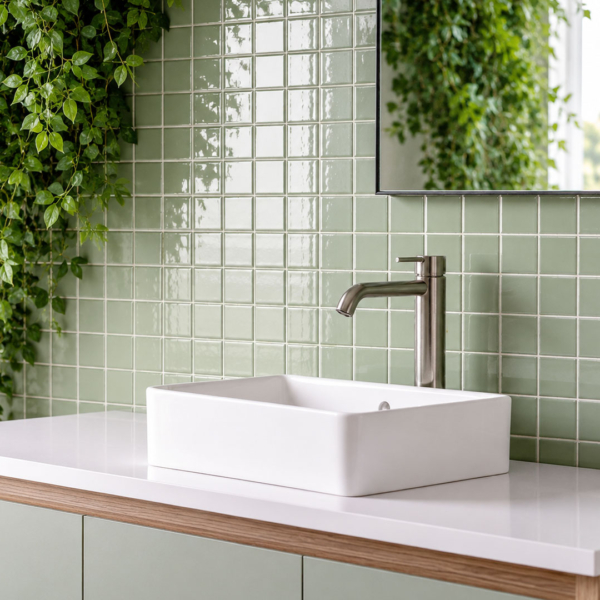
Small-format tiles can bring texture, pattern and visual detail to a bathroom without overwhelming the overall design. From shower floors and recessed niches to vanity splashbacks and feature walls, mosaic bathroom tiles Australia homeowners choose can help create a more distinctive and carefully layered space.
At Cheapestiles, renovators can explore mosaic styles in square, Kit Kat, herringbone, hexagon, penny round and natural stone finishes. This guide explains where mosaics work best, how to choose the right shape and finish, and how to combine them with larger bathroom tiles for a balanced result.
Why Are Mosaic Bathroom Tiles Popular in Australian Bathrooms?
Mosaic bathroom tiles are popular because they combine decorative flexibility with a compact format that can work across shower floors, niches, splashbacks and feature surfaces. They also make it easier to introduce colour or pattern without covering every bathroom surface with a highly detailed tile.
Mosaics can be useful when a design needs:
- Bathroom feature tiles without overwhelming the whole room
- Shower floor mosaics that accommodate smaller areas and detailed layouts
- A contrasting finish behind a vanity
- Texture inside a shower niche
- A transition between different bathroom surfaces
- Colour against otherwise neutral large-format tiles
Rather than treating mosaics as the main tile everywhere, many successful bathrooms use them selectively.

**Mosaic bathroom tiles** add flexible style and texture to shower floors, niches, splashbacks and feature areas
The mosaic bathroom tiles collection at Cheapestiles includes options ranging from simple square mosaics to Kit Kat, herringbone, hexagon and natural stone styles, allowing the pattern to match the role it needs to play in the room.
Where Can Mosaic Tiles Be Used Most Effectively in a Bathroom?
The most effective mosaic applications are usually areas where the smaller tile format provides either a practical or visual advantage. Mosaic shower tiles, niches, splashbacks and feature walls allow a bathroom to gain detail while larger surrounding surfaces remain visually calm.
Why Do Mosaic Tiles Work Well on Shower Floors?
A shower floor normally contains falls toward the drain, making tile scale an important consideration.
Smaller mosaics can follow changes in the floor plane more easily than very large tiles. Their numerous joints also create more surface texture, although this does not mean every mosaic is automatically suitable for wet flooring.
Before selecting mosaic bathroom floor tiles, check:
- Whether the product is suitable for floor installation
- Whether it is recommended for wet areas
- Its finish and surface characteristics
- The grout required
- The tile material
- Manufacturer or supplier application information
Floor suitability should always be assessed from the particular product rather than tile size alone.
How Can Mosaic Tiles Turn a Shower Niche Into a Feature?
A niche is one of the easiest places to introduce mosaic detail.
Because the surface is relatively small, a more expressive shape such as Kit Kat mosaic tiles or herringbone can provide contrast without competing with the main bathroom tile.
For example, a plain large-format shower wall can be paired with a narrow vertical mosaic inside the niche. Repeating one of the mosaic colours elsewhere in the room helps the niche feel integrated rather than added as an afterthought.
How Can Mosaic Tiles Improve a Bathroom Feature Wall?
Mosaic does not have to cover an entire room.
Common feature areas include:
- Behind the vanity
- One wall inside the shower
- Behind a freestanding bath
- A vertical strip through the shower
- The lower or upper portion of a wall
For broader advice on choosing surfaces outside the mosaic feature itself, the guide to bathroom wall tiles Australia explains how wall scale, colour and finish influence the overall bathroom design.
Which Mosaic Tile Shapes Work Best for Different Bathroom Styles?
The best mosaic shape depends on the visual character you want to create. Square mosaics generally feel restrained, elongated forms create direction, and geometric shapes make the pattern itself more noticeable.
| Mosaic style | Visual effect | Best bathroom use | Works well with |
| Square | Clean and balanced | Floors, showers, walls | Stone-look or plain tiles |
| Kit Kat | Linear and contemporary | Niches, splashbacks, feature walls | Large-format tiles |
| Penny round | Soft and decorative | Feature floors and walls | Neutral surfaces |
| Hexagon | Geometric and structured | Shower floors and accents | Concrete or stone looks |
| Herringbone | Dynamic and detailed | Niches and feature walls | Simple surrounding tiles |
When Should Homeowners Choose Square Mosaic Tiles?
Square mosaic tiles suit bathrooms where detail is needed without making the pattern dominant.
Their regular grid works particularly well with minimalist, contemporary and practical bathroom schemes. A simple square mosaic can also bridge different design elements because its geometry does not compete strongly with cabinetry, tapware or stone-look surfaces.
A product such as the Square White Gloss Mosaic Tile 48×48 provides a straightforward option where a bright geometric grid is preferred.
When Do Kit Kat Mosaic Tiles Suit a Modern Bathroom?
Kit Kat mosaics use slim rectangular pieces to create strong linear movement.
Vertical installation can draw the eye upward, while horizontal arrangements can visually stretch a wall. This makes the format effective around vanities, shower niches and narrow feature surfaces.
Cheapestiles currently carries several variations, including the Kit Kat White Matt Mosaic Tile 22×145 and Kit Kat White Gloss Mosaic Tile 22×145. The range also includes slimmer and natural stone interpretations.
The Kit Kat Slim White Matt Mosaic Tile 15×145 has 15×145 mm chips on a 296×296 mm sheet, giving renovators a particularly narrow linear format for detailed feature applications.
Why Do Penny Round Tiles Create a Softer Bathroom Design?
Penny round tiles replace straight grid lines with repeating curves.
That softer geometry can contrast effectively with rectangular vanities, mirrors, shower screens and larger wall tiles. They can work particularly well when the rest of the bathroom is simple and the designer wants the floor or feature area to carry more personality.
White mosaics create a clean, modern bathroom feature
Because penny mosaics already produce a busy pattern, grout colour should be selected carefully. Strong contrast makes every circle more visible, while similar grout creates a quieter surface.
When Do Hexagon Mosaic Tiles Create the Strongest Geometric Effect?
Hexagon mosaic tiles are useful when the geometry itself should become part of the visual identity of the bathroom.
A small hexagon can provide interest on a shower floor without requiring strong colour. White, grey or stone-look finishes keep the effect understated, while contrasting grout gives the pattern greater definition.
Cheapestiles lists a White Matt Hexagon Mosaic Tile 23mm among its white tile options.
How Can Herringbone Mosaics Add Movement Without Overwhelming the Bathroom?
The herringbone arrangement creates directional movement through its repeating angled pattern.
It works especially well where only a limited amount of surface needs emphasis, such as:
- Shower niches
- Vanity splashbacks
- Feature walls
- Narrow wall sections
The pattern is already visually active, so it often looks strongest next to plain surfaces.
For example, the Antique White Gloss Herringbone Mosaic 12×92 provides an off-white porcelain option, while Carrara-look matt mosaics can add subtle stone character.
Which Mosaic Tile Materials Are Suitable for Bathroom Applications?
Porcelain, ceramic and natural stone mosaics can all appear in bathroom designs, but their performance and care requirements differ. The right choice depends on the intended surface, exposure to water and the amount of ongoing maintenance the homeowner is comfortable with.
Why Are Porcelain Mosaic Tiles Practical for Many Bathrooms?
Porcelain mosaic tiles are frequently selected for bathrooms because porcelain can provide a durable, relatively low-maintenance surface when the particular product is suitable for the intended application.
Porcelain is available across numerous looks, including:
- Solid colours
- Marble-look patterns
- Matt finishes
- Gloss finishes
- Herringbone shapes
- Hexagons
- Kit Kat formats
Always confirm whether an individual porcelain mosaic is intended for walls, floors or both.
When Can Natural Stone Mosaics Create a More Premium Finish?
Natural stone brings variation that manufactured surfaces intentionally try to reproduce.
Materials and looks can include:
- Travertine
- Limestone
- Marble
- Ming Green stone
- Botticino tones
Natural stone Kit Kat mosaics can be especially effective around niches or vanity areas where their texture and tonal variation can be appreciated at close range.
However, natural stone may require different sealing and maintenance procedures, so suitability and care instructions should be checked before installation.
Should Bathroom Mosaic Tiles Have a Matt or Gloss Finish?
Matt and gloss mosaics create different visual effects, and neither finish is universally better. Matt surfaces usually feel softer and less reflective, while gloss mosaics bounce more light and can make feature walls appear brighter. Floor selection should be based on product suitability rather than appearance alone.
| Finish | Main visual characteristic | Consideration | Typical application |
| Matt mosaic tiles | Soft, low-reflection surface | May make colour appear more subdued | Floors or contemporary schemes |
| Gloss mosaic tiles | Brighter and more reflective | Water marks may show more easily | Walls and splashbacks |
| Honed mosaics | Natural, tactile appearance | Material-specific maintenance may apply | Niches and feature surfaces |
For example, Cheapestiles offers both matt and gloss versions of its white Kit Kat mosaics, making it possible to keep the shape consistent while changing the way the surface interacts with light.
Which Mosaic Tile Colours Work Best in Australian Bathrooms?
Colour should be considered as part of the entire bathroom palette rather than in isolation. Mosaic creates many repeated grout lines and small individual pieces, so even a subtle colour can become visually prominent when it covers a larger area.
Why Do White Mosaic Tiles Work Well in Minimal Bathrooms?
White mosaics are versatile because they can introduce pattern without requiring a strong colour change.
Different shapes produce very different outcomes:
- White squares feel clean and regular.
- White Kit Kats introduce linear texture.
- White herringbone adds movement.
- White hexagons emphasise geometry.
They also pair easily with timber vanities, stone-look floors and warm or cool metals.
How Can Grey Mosaic Tiles Create a Calm Contemporary Bathroom?
Grey mosaics sit comfortably alongside concrete-look, marble-look and neutral porcelain surfaces.
Dark grey square mosaics bring bold contrast to a compact bathroom
The key is undertone. A warm grey mosaic may pair better with beige or travertine-inspired tiles, while a cooler grey can suit crisp whites and concrete palettes.
The My Mosaic Dark Grey Matt Tile 48×48 listed by Cheapestiles is an example of a darker neutral mosaic that can provide contrast without introducing a new colour family.
When Should Green Mosaic Tiles Become the Main Bathroom Feature?
Green is most effective when the colour has a defined role in the room.
A sage mosaic can create a soft botanical reference, while deeper jade or natural green stone makes a more pronounced statement. Rather than repeating green across every surface, it can be confined to the vanity wall, niche or shower feature.
Homeowners considering a stronger colour-led scheme can also explore how green bathroom tiles Australia can be balanced with neutral floors, fittings and surrounding surfaces.
Can Mosaic Tiles Make a Small Bathroom Look Better?
Mosaics can improve a small bathroom when they create a clear focal point, but covering every surface with a detailed pattern may make a compact room feel visually busy.
Useful strategies include:
- Limit mosaic to one feature zone.
- Keep grout contrast low for a quieter look.
- Repeat the mosaic colour elsewhere in the room.
- Use lighter tones when greater brightness is desired.
- Allow larger plain surfaces to balance detailed patterns.
- Avoid combining several competing mosaic shapes.
The goal is visual hierarchy rather than simply making every tiled surface decorative.
For homeowners still deciding on the wider room concept, these bathroom tiles ideas Australia provide broader inspiration for balancing tile scale, colours and bathroom features without making mosaics responsible for the entire design.
How Should Mosaic Tiles Be Combined With Large Bathroom Tiles?
One of the simplest approaches is to let large-format tiles establish the visual base and use mosaics as an accent. This keeps the room cohesive while allowing the smaller tile to provide texture, colour or movement exactly where it has the most impact.
Three useful principles are:
- Connect at least one colour or undertone.
A mosaic does not need to match the main tile exactly, but there should be a visual relationship. - Allow one pattern to dominate.
If the mosaic is a strong herringbone, hexagon or Kit Kat pattern, the surrounding tile can remain simpler. - Treat grout as part of the palette.
Matching grout softens a mosaic pattern, while contrasting grout makes every individual piece more prominent.
Examples include a neutral large-format wall with a sage Kit Kat niche, a stone-look bathroom with a white herringbone feature, or a simple wall tile paired with a small mosaic shower floor.
Are Mosaic Bathroom Tiles Harder to Clean Than Large Tiles?
Mosaics generally contain more grout joints per square metre than larger tiles, so grout care becomes a more noticeable part of maintenance. However, cleaning requirements also depend on the tile material, finish, grout type, water exposure and ventilation within the bathroom.
To keep mosaic tile maintenance manageable:
- Clean soap residue before heavy build-up develops.
- Use products compatible with the tile and grout.
- Follow specific care instructions for natural stone.
- Seal materials where required by the supplier or installer.
- Maintain adequate bathroom ventilation.
- Pay particular attention to frequently wet shower areas.
Choosing mosaic does not automatically create a difficult-to-maintain bathroom, but the extra grout should be considered before covering very large areas.
What Should Australians Check Before Buying Mosaic Bathroom Tiles?
Before ordering, homeowners should confirm both the design qualities and technical requirements of the tile.
Soft pink mosaics add warmth and texture around the vanity
Use this checklist:
- Is the tile intended for the wall, floor or both?
- Is it suitable for the intended wet area?
- What is the tile material?
- What finish does it have?
- What are the individual chip dimensions?
- What is the full sheet size?
- How many sheets cover one square metre?
- What grout colour suits the design?
- Does the material require sealing?
- How much variation should be expected?
- How difficult will the surface be to maintain?
- How many extra sheets should be allowed for cuts and waste?
Australian buyers outside New South Wales may also need to factor delivery into project planning. Renovators researching bathroom tiles Perth Western Australia should confirm tile quantities and delivery timing before their tiler is scheduled, particularly when mosaics form part of a specific niche or feature layout.
Which Mosaic Styles Suit Different Bathroom Designs?
There is no single mosaic that works for every bathroom. Matching the tile style to the overall design direction generally produces a more resolved result.
| Bathroom style | Mosaic options to consider | Suggested pairing |
| Classic | White square, penny round, Carrara herringbone | White or marble-look tiles |
| Contemporary | Grey square, white Kit Kat, hexagon | Concrete or large-format porcelain |
| Colour-led | Sage Kit Kat, green mosaic | White or warm neutral surfaces |
| Natural | Travertine, limestone, honed stone | Beige or stone-look tiles |
| Minimal | White matt Kit Kat, subtle square mosaic | Large plain tiles |
Cheapestiles’ broader bathroom tiles range can be used to coordinate the mosaic feature with the main floor and wall surfaces rather than choosing each element independently.
Why Should Australians Explore Mosaic Tiles at Cheapestiles?
Choosing mosaic becomes easier when different shapes, materials and finishes can be compared within the same tile range.
Cheapestiles offers bathroom mosaics across square, Kit Kat, herringbone, hexagon and other formats, including both porcelain and natural stone selections. Its range also allows renovators to compare mosaic features with larger bathroom tiles so the entire space can be planned as one coordinated scheme.
Instead of choosing the most decorative mosaic first, begin with the intended location, confirm technical suitability and then decide how much pattern the room needs. That approach helps the mosaic become a deliberate design detail rather than a disconnected feature.
Cheapestiles Contact
📍 Address: 65 Canterbury Road, Bankstown, NSW 2200, Australia
📞 Phone: (02) 9790 4273
✉️ Email: info@cheapestiles.com.au
🌐 Website: https://www.cheapestiles.com.au/