No products in the cart.
Bathroom Sheeting Instead of Tiles Australia: Is It a Better Choice?
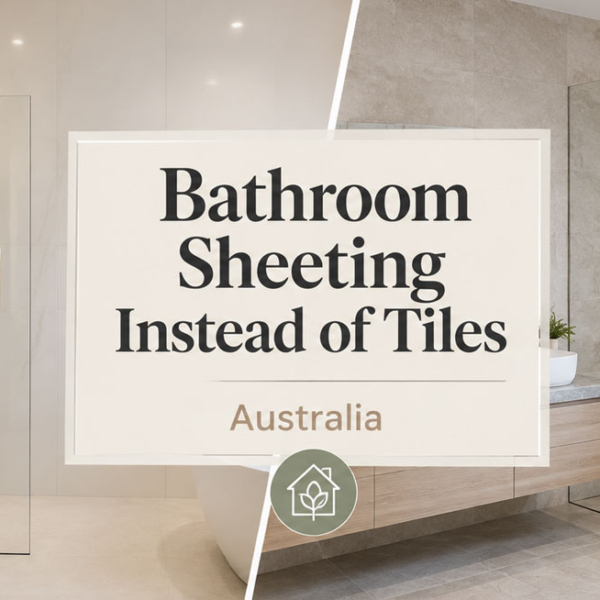
Choosing the right wall finish can significantly affect the cost, maintenance and long-term appearance of a bathroom renovation. For homeowners considering bathroom sheeting instead of tiles Australia, wall panels can offer fewer grout lines and faster coverage, while ceramic and porcelain tiles provide greater design flexibility, durability and options for wet areas.
This Cheapestiles guide compares bathroom sheeting with traditional tiles across waterproofing, installation, cleaning, cost and design. It also explains where a hybrid approach using panels alongside tiled floors, showers or feature areas may provide a more practical solution.
What Does Bathroom Sheeting Instead of Tiles Mean?
Bathroom wall sheeting refers to large panels or boards used as the visible wall finish instead of individual tiles. Depending on the product, these panels may be made from acrylic, PVC, laminate, composite materials or other systems designed for bathroom environments.
Unlike tiled walls, which consist of multiple pieces separated by grout joints, panels cover larger areas with relatively few joins.
Common bathroom panel options include:
- Acrylic bathroom panels
- PVC wall panels
- Laminate wet-wall panels
- Composite wall panels
- Decorative wet-area boards
- Large waterproof or water-resistant sheets
It is important to distinguish decorative panels from construction boards. Some fibre cement sheets, for example, are designed primarily as substrates beneath waterproofing membranes, tiles or other finishes rather than as the final decorative surface.
Can Bathroom Sheeting Replace Tiles in Australian Bathrooms?
Suitable bathroom wall panels can replace tiles in certain areas, but homeowners should select products specifically designed for the intended location. A wall exposed directly to shower water has different requirements from a wall behind a vanity, toilet or storage cabinet.

Bathroom sheeting offers a clean, low-joint finish for modern bathrooms
Panels can work particularly well on:
- Vanity walls
- Toilet areas
- Low-splash walls
- Feature surfaces
- Some bath surrounds
- Simple shower walls when the product is designed for that application
Greater care is required around:
- Shower corners
- Wall-to-floor junctions
- Shower niches
- Tap penetrations
- Bath and shower combinations
- Areas exposed to constant moisture
Australian bathrooms are wet areas, so the visible wall finish should be considered together with the underlying substrate, waterproofing system and installation method.
Do Bathroom Wall Panels Still Need Waterproofing?
A waterproof-looking surface does not automatically mean the entire wall system is waterproof. Effective bathroom waterproofing depends on how the substrate, membranes, joints, corners, penetrations and final surface work together.
This is particularly important in shower areas where water repeatedly reaches walls and floor junctions.
Homeowners should therefore check:
- Whether the panel is approved for direct wet-area use
- The manufacturer’s installation requirements
- Whether a waterproof membrane is required behind it
- How panel joins should be sealed
- How pipes and tap penetrations are treated
- Whether the substrate is compatible with the system
Professional installation is especially valuable in high-moisture bathroom areas, where a small failure around a joint may eventually allow water to reach the wall structure.
Are Bathroom Panels Cheaper Than Tiles?
Bathroom panels can reduce labour because one large sheet covers significantly more wall area than multiple individual tiles. However, panels are not automatically the cheapest solution once material quality, preparation, waterproofing, trims and professional installation are considered.
| Cost factor | Bathroom sheeting | Bathroom tiles |
| Material range | Budget to premium | Budget to premium |
| Installation speed | Usually faster | Usually slower |
| Grout required | Minimal | Yes |
| Wall preparation | Required | Required |
| Wet-area preparation | Depends on system | Depends on location |
| Local repairs | Can be difficult | Individual tiles may be replaced |
| Design range | Moderate to broad | Very broad |
Budget panels can appear inexpensive initially, while high-quality decorative wall systems may cost considerably more.
Tiles also vary greatly in price. Standard ceramic products can offer an economical renovation option, while porcelain, decorative mosaics and premium stone-look surfaces sit at higher price points.
For this reason, the best comparison is total installed cost rather than material cost alone.
What Are the Main Advantages of Bathroom Sheeting?
The main advantage of wet-area wall panels is simplicity. Large surfaces can cover walls quickly while reducing the number of joints that need routine cleaning.
Key benefits include:
- Fewer grout lines
- Faster wall coverage
- Straightforward surface cleaning
- Large continuous visual surfaces
- Potential labour savings
- Modern minimalist appearance
- Good suitability for simple wall layouts
Panels can therefore appeal to homeowners who want a low-maintenance bathroom without spending as much time cleaning grout.
They may also suit investment properties, compact bathrooms and quick renovation projects where installation speed is an important consideration.
What Are the Disadvantages of Bathroom Sheeting?
Bathroom panels provide convenience, but they can involve trade-offs in design flexibility, repairability and long-term appearance.
Potential disadvantages include:
- Visible panel joins
- Limited layout flexibility
- More difficult detailing around niches
- Product-specific installation systems
- Scratches on some surfaces
- Difficulty replacing a small damaged section
- Limited colour or texture ranges in some collections
A damaged tile can sometimes be removed individually. A damaged panel may require a much larger section to be replaced.
The final appearance also depends strongly on product quality. Premium panels can create a convincing stone or contemporary surface, while low-cost options may have noticeably printed or artificial finishes.
Are Tiles More Durable Than Bathroom Sheeting?
Quality ceramic bathroom tiles and porcelain bathroom tiles provide excellent resistance to moisture, everyday cleaning and surface wear. This is one reason tiles remain widely used in showers, bathrooms and other wet areas.
Large-format tiles create a seamless look with lasting durability
The tile itself generally requires little maintenance. Grout and silicone joints are the areas that usually need more attention over time.
Porcelain is particularly useful when homeowners want:
- Hard-wearing surfaces
- Low water absorption
- Stone-look finishes
- Concrete-look finishes
- Large-format designs
- Coordinated floor and wall surfaces
Homeowners comparing their finishing options can browse the bathroom tile range at Cheapestiles to see how different formats, colours and finishes could work within a full-tile or hybrid renovation.
For more decorative spaces, mosaic bathroom tiles Australia can be used selectively in niches, splashbacks or feature zones rather than covering every wall, allowing homeowners to retain visual detail while limiting the amount of grout across the overall bathroom.
Are Bathroom Panels Better Than Tiles for Shower Walls?
There is no universal winner for shower walls. Shower wall panels offer fewer joints and can make regular cleaning easier, while tiles provide greater control over layout, colour, texture and detailing around complex shower features.
Panels may suit a shower when:
- Walls are relatively straight
- Minimal joints are preferred
- Fast installation matters
- The selected system is approved for shower use
Tiles may suit the space better when:
- The shower contains niches
- Multiple corners require detailed finishing
- A customised pattern is desired
- Stone, marble or terrazzo looks are preferred
- Long-term repairability is important
Tile can also make it easier to visually connect the shower with the rest of the bathroom.
Homeowners exploring bathroom wall tiles Australia can consider larger tile formats when they want a more seamless appearance without completely giving up the practical advantages of a tiled surface.
What Is Better for Bathroom Floors: Sheeting or Tiles?
Wall panels and bathroom flooring should be treated as separate decisions. Most decorative wall sheeting is not intended to replace a suitable bathroom floor finish.
A bathroom floor must cope with water, foot traffic, cleaning and daily wear while also supporting safe movement through the room.
Important considerations include:
- Slip resistance
- Water resistance
- Surface durability
- Ease of cleaning
- Floor falls and drainage
- Compatibility with the waterproofing system
Porcelain and ceramic remain common bathroom flooring materials because they are available in finishes designed for wet spaces.
When selecting flooring, homeowners should focus on functionality first and then coordinate the colour and texture with whichever wall finish they choose.
Can You Combine Bathroom Sheeting and Tiles in the Same Bathroom?
Yes. A hybrid bathroom design can be one of the most practical ways to use both materials.
Instead of covering every surface in the same finish, tiles can be concentrated where durability, texture or visual impact matters, while panels cover simpler wall areas.
A hybrid bathroom combines wall panels with feature tiles for balance
Four practical combinations include:
Tile Floor With Panel Walls
This arrangement keeps the durability and design flexibility of a tiled floor while minimising grout across vertical surfaces.
It suits homeowners who want simple maintenance and a relatively streamlined wall finish.
Tiled Shower With Panelled Dry Walls
The shower can become the main tiled zone while panels cover areas around the vanity, toilet or storage.
This arrangement also allows the shower to act as a visual feature.
Tile Feature Wall With Neutral Sheeting
A decorative tiled wall behind the vanity or bath can introduce colour and pattern without requiring a fully tiled room.
For example, homeowners considering green bathroom tiles Australia could use muted green tiles on one focal wall while keeping surrounding surfaces neutral and simple.
Full Tiled Floor With Selected Tiled Niches
Panels can cover most vertical surfaces while small-format or patterned tiles are used inside shower niches and other detail areas.
This approach provides visual contrast without adding large amounts of grout.
Where Should Tiles Still Be Considered in a Panel-Based Bathroom?
Even when wall panels are the dominant finish, tiles can still be useful in selected areas.
Good locations include:
- Shower feature walls
- Vanity splashbacks
- Bath surrounds
- Shower niches
- Bathroom floors
- Half-height wall sections
Tiles are particularly useful where the homeowner wants texture, colour variation or a finish that looks less uniform.
Because individual tile sizes range from mosaics to very large slabs, the amount of grout can also be controlled much more than many homeowners assume.
Which Types of Tiles Work Well With Bathroom Sheeting?
The most successful hybrid bathrooms usually use tiles that complement rather than compete with the wall panels.
Large-Format Porcelain Tiles
Large-format bathroom tiles are particularly relevant for people considering sheeting because they achieve a similar visual goal: fewer joints.
Using larger tiles can create:
- Cleaner wall surfaces
- Reduced grout lines
- Modern proportions
- Continuous stone or concrete effects
They provide a useful middle ground between traditional small tiles and full wall panels.
Marble-Look Tiles
Marble-look porcelain tiles can create a feature around a shower or bath without the maintenance requirements associated with natural stone.
Neutral wall panels can then keep the rest of the room visually restrained.
Concrete-Look Tiles
Concrete-look bathroom tiles pair naturally with simple wall sheeting in industrial, minimalist and contemporary bathrooms.
Warm beige or soft grey concrete tones can also make the room feel less clinical.
Patterned Feature Tiles
Small patterned tiles are best used selectively when the rest of the bathroom has large, plain surfaces.
Suitable applications include:
- Vanity splashbacks
- Niches
- Half walls
- Bath features
The contrast between a detailed tile and a simple panel can make a small area more visually prominent.
Is Large-Format Tile a Good Alternative to Bathroom Sheeting?
For homeowners primarily interested in sheeting because they dislike grout, large-format tiles deserve consideration before a final decision is made.
Larger tiles reduce the number of joints while retaining many familiar tile benefits, including surface durability, broad design choice and the ability to coordinate floor and wall finishes.
They can be particularly useful in:
- Walk-in showers
- Large bathroom walls
- Minimalist bathrooms
- Stone-look designs
- Contemporary renovations
Large-format tiles still require correct surface preparation and professional installation, but visually they can produce much cleaner expanses than traditional small-format layouts.
Which Is Easier to Clean: Bathroom Sheeting or Tiles?
Panels generally have an advantage when the only consideration is the number of joints. Their broad surfaces can usually be wiped clean quickly, with only panel joins and silicone requiring additional attention.
Tiles themselves are also easy to maintain, although grout lines need periodic cleaning.
| Cleaning factor | Wall panels | Tiles |
| Daily wiping | Easy | Easy |
| Number of joints | Low | Depends on tile size |
| Grout cleaning | Usually minimal | Required |
| Silicone maintenance | Required | Required |
| Hard-water marks | Possible | Possible |
| Small surface repairs | Often harder | Often easier |
Using large-format porcelain tiles significantly narrows the maintenance difference because fewer grout joints are required.
Do Bathroom Panels or Tiles Add More Value to a Home?
A bathroom’s value cannot be determined by one surface material alone. Buyers are more likely to judge the complete renovation according to workmanship, layout, waterproofing quality, storage, fixtures, colour selection and overall condition.
Tiles remain a familiar finish and can support premium bathroom designs, but well-selected wall panels can also create an attractive contemporary space.
More important factors include:
- Quality installation
- Cohesive colour scheme
- Durable surfaces
- Effective ventilation
- Proper wet-area construction
- Timeless material selection
A well-designed hybrid bathroom can therefore be just as visually resolved as one finished entirely in tiles.
How Should You Choose Between Bathroom Sheeting and Tiles?
The best choice depends on how you prioritise maintenance, design, cost and long-term performance.
Tiles remain a practical choice for floors, showers and feature areas
Choose bathroom sheeting when:
- Fast installation is important
- You want fewer wall joints
- Easy cleaning is a high priority
- Your bathroom has straightforward wall shapes
- You prefer broad, continuous surfaces
Choose bathroom tiles when:
- Design flexibility matters
- You want greater control over colour and texture
- The bathroom includes niches or complex details
- You prefer matching floor and wall finishes
- Long-term surface durability is important
Choose a hybrid bathroom when:
- You want to control renovation costs
- Only some areas need feature finishes
- You want fewer grout lines without eliminating tiles
- Different bathroom zones have different performance needs
There is no requirement for every bathroom surface to use the same material. Treating walls, shower areas, floors and feature zones separately usually leads to a more practical result.
How Can Cheapestiles Help Complete a Bathroom Using Mixed Finishes?
Using bathroom sheeting does not mean tiles need to disappear from the design completely. Many bathrooms work best when different materials are used according to the demands of each area, with panels covering broad wall surfaces and tiles adding durability, texture or visual interest where it matters most.
For homeowners planning this type of combination, Cheapestiles offers bathroom tiles, porcelain tiles, large-format tiles and decorative options that can be used on floors, shower zones, niches and feature walls. Comparing these finishes alongside wall sheeting can make it easier to create a bathroom that feels cohesive without relying on a single material throughout the entire space.
Cheapestiles Contact
📍 Address: 65 Canterbury Road, Bankstown, NSW 2200, Australia
📞 Phone: (02) 9790 4273
✉️ Email: info@cheapestiles.com.au
🌐 Website: https://www.cheapestiles.com.au/